Joshua Nahamya
MBARARA CITY – Seed Global Health officials have reinforced the partnership with Mbarara University of Science and Technology [MUST] and Mbarara Regional Referral Hospital [MRRH] to continue supporting emergency medicine in Western Uganda.
This was revealed recently during a partnership learning dinner at Las Vegas in Mbarara City that was attended by some of the Seed Global Health Uganda officials, Senior Physicians at Mbarara University of Science and Technology [MUST], resident emergency students, and other dignitaries from Canada, which are all partners of Seed Global Health Uganda, a nongovernmental organization partnering with the Ministry of Health [MOH] to improve emergency care, maternal, newborn, and child health services in the country.
According to Irene Atuhairwe Duhaga, Country Director, Seed Global Health Uganda, the five-year emergency care training partnership with MUST was extended from June 2024 until 2030 extending emergency care training and practice within the university and MRRH.
Unlike the previous year’s partnership, Atuhairwe stipulated that the new collaboration was increased to 6 years to enable the two entities to conclude some of the projects that were interrupted by the COVID-19 pandemic.
“We’ve just completed our strategic plan of 2019-2024 which highlights emergency medicine [EM], maternal health, and newborn child health care. It was launched last year in June, moving up to 2030. You can see we are not going away and within that program, EM is still our focus,” Atuhairwe said.
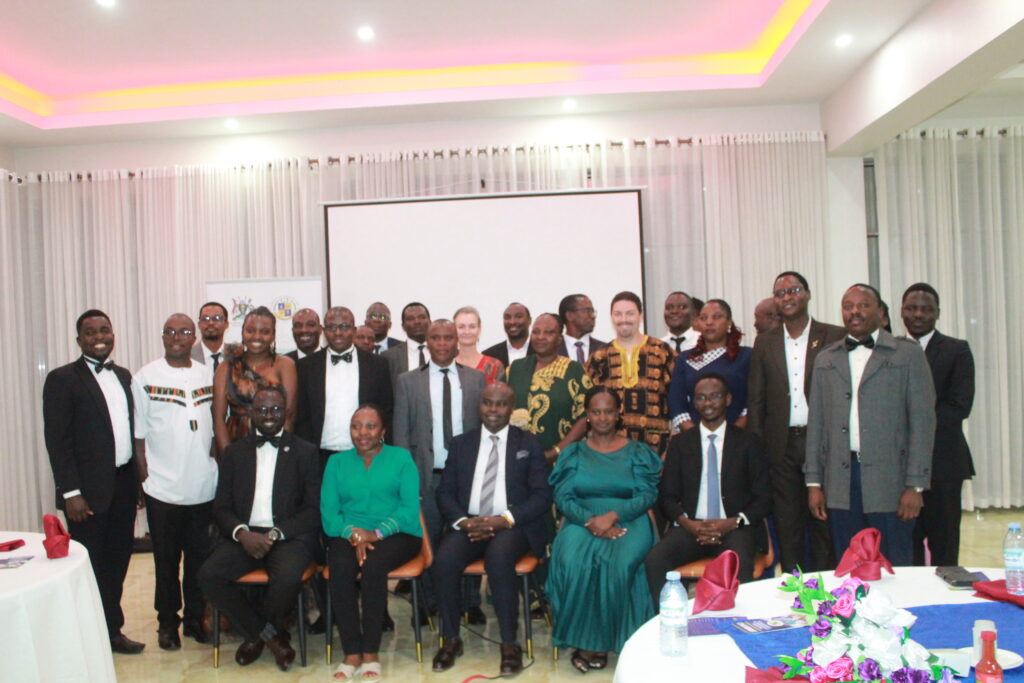
MRRH EM physicians and MUST Heads of department, EM Residents and Seed Global Health Officials in a photo after the dinner. Joshua Nahamya
According to Atuhairwe, the health support that started in 2013 has seen a total of 25 medics trained under emergency medicine out of 120 emergency physicians required by 2030.
“Between 2013 and 2018 we had a partnership with the US Piscal and during that time we were training everyone, it was a cocktail and the partnership was very good but we later learnt that it did not have an impact. When that program ended, we made an assessment and with Mbarara our work is emergency medicine that we now have a lot of milestones,” she said
“When we started there was no Ugandan EM educator but as we speak we now have three and the team has grown. Even in three faculties, we had no emergency physicians but as we speak we now have 25 in the whole country. Yet we need 120 emergency physicians about 30% out of what the country requires, but I don’t know if we shall have achieved it by 2030,” Atuhairwe added.
The country director added that Seed Global Health has introduced scholarships to medics to increase the number of emergency medicine physicians in Uganda.
“One of the challenges we’ve had is that when these people finish the course, they go back to their respective countries. So part of the strategies to make sure that we have Ugandan residents and physicians, we are offering scholarships for emergency physicians to reduce mortality by 30% in the emergency department,” Atuhairwe noted
She also asked Mbarara Hospital officials to absorb the emergency medicine students who finished the course to increase the number of emergency physicians in the regional hospital.
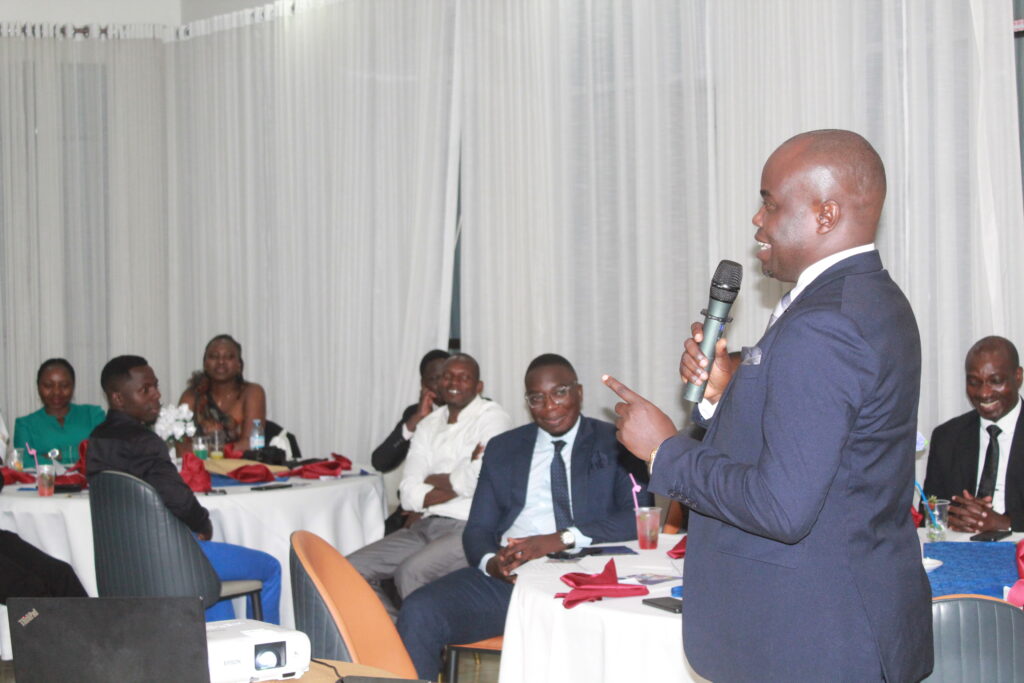
Prof Joseph Ngozi, Dean Faculty of Medicine MUST. Joshua Nahamya
“We’ve seen other hospitals advertise and recruit emergency physicians, however Mbarara regional referral which is our centre of excellence has not prioritized that. As we move forward, we want to see that the emergency physicians we are training should be absorbed by the hospital here.” Atuhairwe said
On her part, Juliet Ankunda, Principal Nursing Officer Mbarara Regional Referral Hospital asked Seed Global Health officials to also consider enrolling nurses in emergency care.
“If you are a doctor of masters and you are working with a nurse who has a certificate, do you think you would perform to the best? I wish if the nurses can also be trained in emergency medicine as well,” Ankunda stated
She also appealed to emergency medicine physicians to stop asking patients for money as part of the bribe before treating them.
“Emergency medicine physicians should love the course not for money but to save people’s lives. We have seen doctors who have been diverted and instead of saving the life this doctor is asking a patient Shs 200,000 when the patient is dying. Is that emergency medicine? It is very unfortunate.” Ankunda noted
Dr Joseph Kiwanuka Kyobe, Anaesthesiologist at MUST, asked the government to always provide enough resources to enable them to do their work effectively.
“There is a time I was called to attend to a patient who had been at the EM I think about for four days. This is a patient who should have been nicely but it’s because we are now failing due to lack of resources. If we had the actual resources, then we would be sailing, and hopefully given that we have the policy makers here these issues can be sorted out within no time” Kyobe said
He also highlighted the need for the improvement of the ambulance system in Uganda to pay attention to emergency cases on time.
“Covid19 showed us where we are on the health index. We cannot keep thinking that it is a miracle for an ambulance to go to the scene of an accident. We also need to stop thinking about police evacuating a victim from the scene of the accident to the hospital.” Kyobe noted
For his part, Prof. Joseph Ngonzi, Dean Faculty of Medicine, MUST, pledged total support for emergency medicine as a core course at MUST.
“As we look forward to greater strides in the near future, the support that you need, that is within our means, even that is beyond our means but we are able to advocate for you, we shall do so as a university,” Ngonzi said
He confirmed that the Ministry of Health has already committed funds to construct an emergency medicine building in the university during the forthcoming financial year.
“We cannot shy away from the issue of resources; we need to provide adequate EM space. In part of our faculty meetings there is a proposed floor for emergency medicine construction coming up and once the budget is soon read, money for the construction will be released by the government and at least we shall have enough space for the department.” Ngonzi stated
Seed Global Health Uganda is a non-government organization that partners to train nurses, midwives, and physicians, building complete health teams that can provide high-quality care and save lives.
The MUST-MRRH-SEED interdisciplinary collaboration started in 2013 where they have so far received ultrasound equipment, EM building, training, and capacity building as part of life-saving intervention on trauma, maternal health, and emergency cases.
Currently, it is estimated that MRRH’s catchment area includes five million people, a figure far exceeding that of its counterparts. This is because the hospital receives patients not only from the Ankole catchment area but also from other regional referral hospitals, refugee communities, and neighboring countries such as the Democratic Republic of Congo, Tanzania, Rwanda, and Burundi.